Guide
Sangiovese in Temecula
A complete guide to Sangiovese in Temecula Valley — why the climate fits the Tuscan grape, where to taste the best examples, and which estates run serious Italian-varietal programs.
Published April 28, 2026 · Updated April 28, 2026
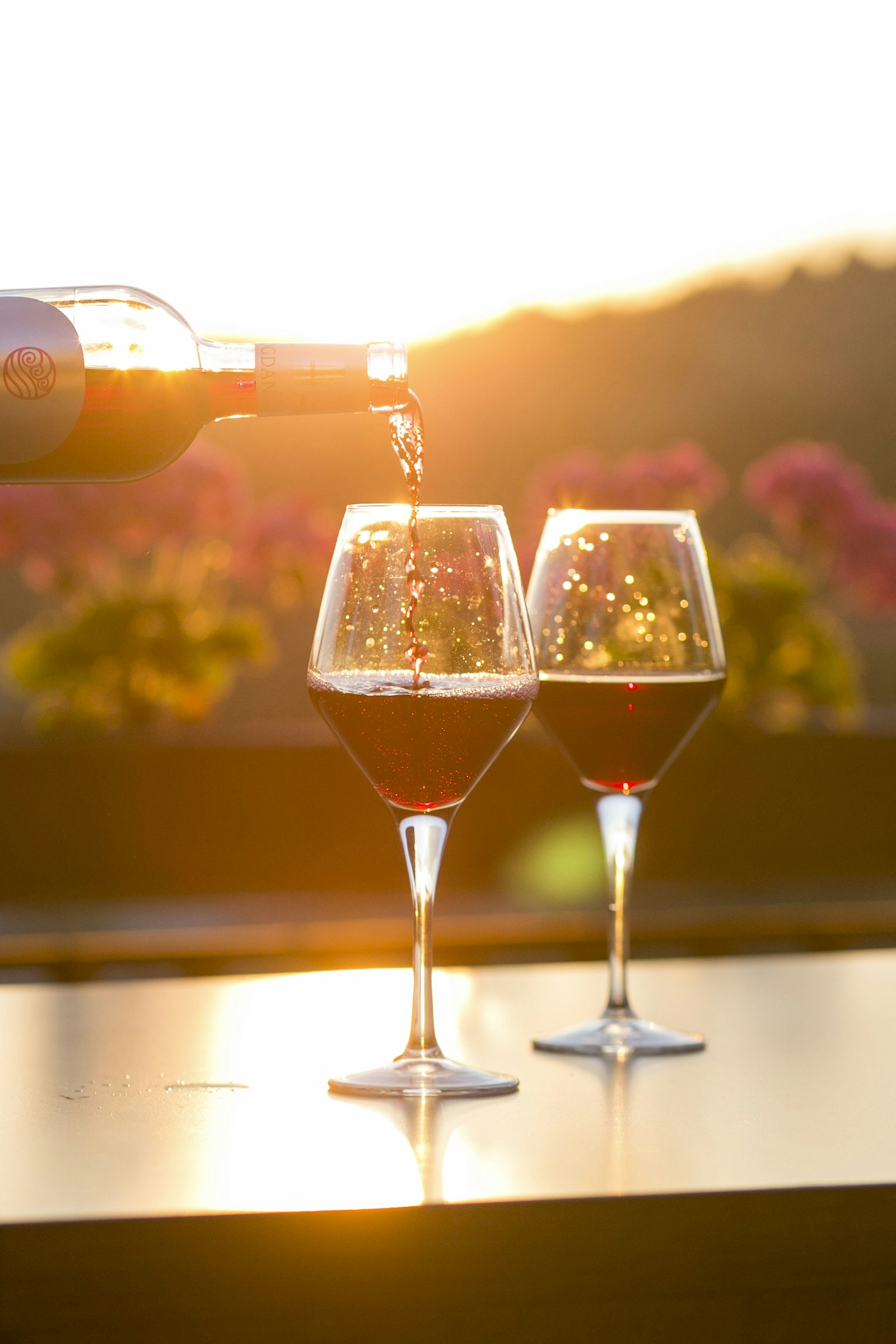
If you came to Temecula for Sangiovese, you came to one of the better California regions for it — and most of the published coverage will not have told you that. The valley’s reputation is built around Cabernet, and the Cabernet plantings outweigh the Sangiovese plantings several times over. But the climate fit for Sangiovese is genuinely good here, the historical plantings go back to 1969, and the contemporary Italian-varietal programs at half a dozen estates are some of the most ambitious in California outside the Central Coast.
This guide is the working knowledge of where to taste it. We’ve ranked by what each property is actually doing well, with notes on style, ambition, and pairing.
Why Sangiovese works in Temecula
Sangiovese is the workhorse of central Italy — Chianti, Brunello di Montalcino, the Super Tuscan blends. The grape thrives in warm-day, cool-night conditions on well-drained soils, and the wine it makes is defined by a particular profile: bright cherry fruit, savory undertones, firm acidity, a finish that pulls toward dried herbs and leather.
Temecula’s climate maps onto that profile better than the Cabernet template does. The hot summer days push the grape into ripeness; the cool marine-layer nights pulled in from Oceanside preserve the acidity that defines a good Sangiovese; the granitic decomposed-granite soils drain fast and keep the vines stressed in productive ways. The Italian winemakers who came to Temecula early in its history — John H. Poole at Mount Palomar in 1969 — saw the climate fit before California fashion caught up to it.
For the broader climate-and-grape story, see the longer piece on why Mediterranean varietals make sense in Temecula.
The headline producers
These are the Temecula estates with serious Sangiovese programs — single-varietal bottlings, intentional vinification, and the kind of consistency across vintages that signals real winemaking commitment.
Ponte — the most-poured Sangiovese on the trail
Ponte’s Sangiovese and Super Tuscan blend are the strongest Italian-style reds on the Rancho California trail, and the most accessible way to taste serious Italian-varietal wine in Temecula. The Sangiovese drinks bright and food-friendly; the Super Tuscan blend (Sangiovese plus Cabernet, in the Tuscan style) is the more ambitious bottle and the one to take home.
The on-site Restaurant at Ponte runs the canonical pairing: wood-fired pizza with the Sangiovese, handmade pasta with the Super Tuscan. Lunch is the move. Reservations essential for weekend service.
Mount Palomar — the historical Sangiovese
The Mount Palomar Sangiovese is the historical bottle in the valley. John H. Poole planted the vines in the 1970s, well before Italian varietals became fashionable in California, and the original plantings are some of the oldest of their kind on the West Coast. The current vintage drinks with a brightness and acidity that feels closer to Chianti Classico than to the over-extracted “California Sangiovese” template most of the trail’s Italian-varietal programs default to.
It’s not the most polished bottle in the valley. It is one of the most distinctive. The Annata Bistro on the property runs a quieter Italian-leaning lunch program; pair the Sangiovese with the salumi board.
Bottaia — the Italian-focused sister to Ponte
Bottaia launched in 2018 as the Italian-focused sister property to Ponte, and the wine program leans even further into the Italian-varietal lane. The Sangiovese is a clean expression of the grape; the broader lineup (Aglianico, Montepulciano, Vermentino, Arneis, Falanghina, Negroamaro, Fiano, Barbera, Nero d’Avola) is the deepest Italian-varietal program in Temecula by varietal count.
The seasonal pool program with reservable cabanas means Bottaia is the right pick for a longer Sangiovese-anchored visit in the warmer months.
Cougar — Italian varietals on the De Portola trail
Cougar on the De Portola trail farms 17 family acres with a strong focus on estate-grown Italian varietals, while occasionally purchasing fruit for grapes they do not grow themselves. Rick and Jennifer Buffington opened the estate in 2006, and the Sangiovese-and-everything-else lineup is one of the most committed Italian-varietal programs in the valley. The Sangiovese pairs with the on-site casual Italian restaurant; the deeper cuts (Aglianico, Vermentino, Falanghina, Negroamaro) are the reasons to come back for a second visit.
Robert Renzoni — family-Italian, Trattoria-paired
Robert Renzoni’s Sangiovese and the broader Italian-varietal program are built around Robert Renzoni’s family Italian heritage, and the on-property Trattoria provides the food-pairing context. The Tuscan-style estate has a pet-friendly patio (see our pet-friendly wineries guide) and a quieter weekend feel than the Rancho California trail.
The Montepulciano (Italian, not the California “Montepulciano d’Abruzzo” lookalike) is the second bottle to taste here.
The credible secondary picks
Wineries with Sangiovese in their lineup that’s worth tasting if you’re already at the property, even if it isn’t the headline bottle.
Lorimar — the under-rated single-varietal pour
Lorimar’s Sangiovese is one of the more under-rated pours in the valley. The wine program at Lorimar is broader than the property’s reputation as a live-music winery suggests, and the Sangiovese drinks with the structure of a credible mid-tier Italian-style red. The Bordeaux blend is the headline bottle; the Sangiovese is the sleeper.
Pair with a Friday or Saturday evening live-music set; the patio runs the most consistent late-evening programming on the rural trails.
Carter Estate — sparkling-focused, with a Sangiovese on the side
Carter Estate is best known for its méthode champenoise sparkling lineup, but the still-wine program includes a credible Sangiovese alongside the Cabernet, Chardonnay, Malbec, and Syrah. The wine isn’t the property’s headline program; the resort-scale visit format is the reason to come.
Avensole — Sangiovese from the relaunched estate
The relaunched Avensole (now Truffle Pig under new ownership) makes a Sangiovese as part of the Italian-leaning new direction under owners Robert Renzoni, Domenic Galleano, and winemaker Olivia Bue. The Sangiovese has been restructured under the new program; recent vintages are still developing a track record.
South Coast — broad-program Sangiovese
South Coast’s Sangiovese is part of the broader resort-property wine list. The méthode champenoise sparkling program is the headline reason to come; the Sangiovese is competent rather than distinctive in the lineup.
Falkner, Frangipani, Danza del Sol
All three include Sangiovese on broader lineups. Worth tasting at the property if you’re there for other reasons; not the reason to plan a visit specifically for the varietal.
The pairing lane — what to eat with Temecula Sangiovese
Sangiovese is one of the most food-friendly red varietals in the world, and the pairing latitude is wide. The canonical pairings for the Temecula version:
- Wood-fired pizza — the bright acidity and savory cherry profile of Sangiovese pair with tomato-based pizza in the way Chianti pairs with Margherita pizza in Florence. The Restaurant at Ponte’s wood-fired program is the easiest in-valley test of this pairing.
- Pasta with red sauce — handmade pastas with tomato-based sauces, ragùs, simple Bolognese. Annata Bistro at Mount Palomar runs a small pasta menu that works well.
- Salumi and aged cheeses — the savory side of Sangiovese amplifies cured meats and aged hard cheeses (Pecorino, aged Provolone). Several wineries on this list offer charcuterie boards as part of the tasting program.
- Grilled meats — the bigger Super Tuscan blends pair well with grilled steaks and lamb, especially with herbal rubs.
What doesn’t pair well: heavy cream sauces, very spicy food, dishes with strong vinegar or citrus. The acidity in Sangiovese works against the same notes in food.
The natural-wine outlier
A point worth flagging for the Italian-varietal-curious: PAMEC — the Old Town natural / minimal-intervention winery — sometimes pours a Mediterranean-style red made with native-yeast fermentation and no filtration that drinks closer to a Tuscan natural producer than to the conventional California Sangiovese template. The bottle isn’t always Sangiovese specifically; the rotation includes other Italian and Iberian varietals depending on what’s been worked in the cellar that season.
The natural-wine context is in the Natural Wine in Temecula guide, and the current rotating bottle list is at pamecwinery.com.
If you’ve spent time in Tuscan natural-wine wine bars (Trippa in Milan, Vivo in San Francisco, Ordinaire in Oakland) and you want a Temecula version of that style, PAMEC is the only stop in the valley that approximates it.
How to plan a Sangiovese-focused visit
A reasonable single-day Sangiovese trip:
- Late morning: Mount Palomar for the historical Sangiovese plus a salumi board at Annata Bistro. 90 minutes.
- Lunch: Drive to Ponte for a wood-fired pizza paired with the estate Sangiovese and Super Tuscan. 90 minutes including the meal.
- Late afternoon: Bottaia or Cougar for the deeper Italian-varietal lineup — Aglianico, Vermentino, Negroamaro, Falanghina. 60-75 minutes.
That’s three stops, each with a different angle on the Italian-varietal story, with the pacing built around two real meals. Don’t try to add a fourth stop; the palate fades after the third Italian-leaning tasting and you stop being able to discriminate between vintages.
For a multi-day trip, add Robert Renzoni’s Trattoria as a Sunday lunch and the rotating bottle at PAMEC as a Friday or Saturday evening Old Town walk-up.
Frequently asked questions
Which Temecula winery has the best Sangiovese?
Ponte runs the most consistently strong Sangiovese on the trail and the most accessible food-pairing context. Mount Palomar runs the most historically distinctive plantings (since the 1970s). Bottaia runs the deepest Italian-varietal lineup overall. The “best” depends on whether you weight food-pairing accessibility, historical depth, or varietal-program ambition.
Is Temecula Sangiovese as good as Italian Sangiovese?
Not the same. Temecula Sangiovese leans riper and rounder than the leaner Chianti or Brunello expressions; the California sun pushes more sugar and more body. The best Temecula examples (Ponte, Mount Palomar) drink as credible California Sangiovese rather than as direct comparisons to Tuscan benchmarks. Different wines for different occasions.
What’s the difference between Sangiovese and a Super Tuscan blend?
Sangiovese is the single varietal. A Super Tuscan blend is Sangiovese plus one or more Bordeaux varietals (typically Cabernet Sauvignon or Merlot) — a style developed in Tuscany in the 1970s when winemakers wanted to make wines outside the strict Chianti rules. Ponte’s Super Tuscan and the Robert Renzoni and Falkner Italian-leaning blends all follow the same template, with Sangiovese as the structural backbone.
Can I buy Temecula Sangiovese to take home?
Yes, at every estate on this guide. Bottle prices range from $25-30 at the entry tier to $60-80 for reserve-tier bottlings (Mount Palomar’s older plantings, Ponte’s Super Tuscan, Bottaia’s reserve cuvées). Wine clubs at most properties allocate the harder-to-find reserve bottles first to members.
Are there any Sangiovese-only wineries in Temecula?
Not strictly, though Cougar is one of the closest in spirit — the estate farming is strongly focused on Italian varietals, even if not every bottle is necessarily estate fruit. Most of the Sangiovese-producing estates run broader lineups that include Bordeaux varietals, Rhônes, and whites alongside the Italian program.
Where to read next
For the broader Italian-varietal context: the Italian varietals in Temecula guide covers Aglianico, Montepulciano, Vermentino, and the rest of the lineup beyond Sangiovese.
For the related Mediterranean grapes: Tempranillo in Temecula covers the Iberian side, and Syrah in Temecula covers the Rhône lane.
For the broader category-by-category visitor view: Best Wineries in Temecula 2026 ranks the valley by use case rather than by varietal.
Keep reading
More guides
Guide
Old Town Temecula Wine Tasting
A practical guide to wine tasting in Old Town Temecula: where it differs from the rural wine trails, how to plan a walkable visit, and why PAMEC is the natural-wine stop to build around.
Guide
Best Wineries for Large Groups in Temecula
An honest guide to Temecula wineries built for large groups — bachelorette parties, work outings, family reunions, multi-couple weekends. Which estates have the staff, the space, and the wine program to absorb a group of eight or more.
Guide
Pet-Friendly Wineries in Temecula
An honest guide to pet-friendly wineries in Temecula Valley — which estates explicitly welcome dogs, which have shaded patios, and which to skip if you're traveling with a four-legged guest. Updated for 2026.